
Real homeowners are asking the same questions on Reddit and neighborhood forums — about price shock, safety fears, hidden costs, and whether they're being upsold. This guide answers all of it, straight from what DFW homeowners are actually dealing with.
Why are quotes ranging from $2,000 to $13,000 for the same job?
This is hands-down the most common frustration we see — homeowners getting three quotes and wondering if one electrician is ripping them off or another is cutting corners. The confusion is completely valid.
Quotes vary because "panel upgrade" can mean very different things depending on what your home actually needs. A clean, straight-swap 200A upgrade in a newer home with accessible service entrance and no code violations is genuinely less work than a job in a 1985 home that needs grounding upgrades, utility coordination, and a permit inspection.
Is $4000 for new electrical panel a good deal?" "The quote to replace the panel was 5k in Phoenix. Is that reasonable?" "Nearly $10k for a panel upgrade? Feels pretty high."— Real posts from r/homeowners, r/electrical, r/AskElectricians
"On average a typical panel upgrade is going to cost about $6,000 to $8,000, including the 200-amp panel, feeder upgrade, whole-home surge protector, permit, and inspection. If people are quoting you $10,000 to $15,000, you should definitely get a second opinion."
— Nathan Tiner, ABR Electric ABR Electric.
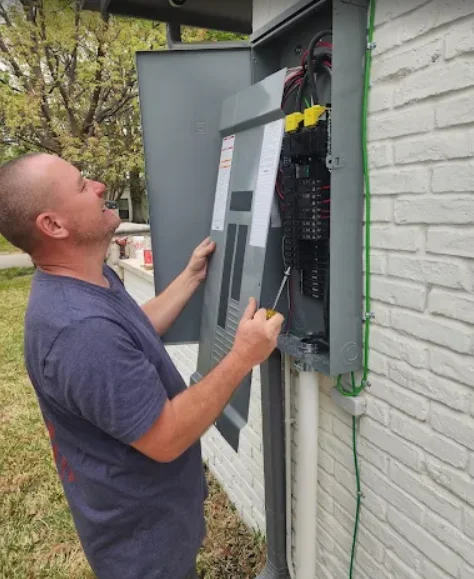
Do you really need a panel upgrade, or are you being upsold?
This is a legitimate concern. Some homeowners are told their "functional" panel is dangerous when it might just be old. Others have genuinely hazardous panels and don't know it. Here's how to tell the difference.
Certain panel brands have a documented history of dangerous failures — not just "outdated" labeling. Federal Pacific (Stab-Lok), Zinsco, Challenger, and old Bulldog Pushmatic breakers have been shown to fail to trip during overloads, which is exactly when you need them to. That's not an upsell. That's a documented fire hazard that insurance companies take seriously enough to deny coverage over.
My house has an outdated Zinsco... should be replaced, but hasn't been." "Panel upgrade — worth it if already 200amp in a 46-year-old house?"— r/electrical, r/AskElectricians
"If you have a 40 or 50 year old panel — Federal Pacific, Zinsco, Bulldog Pushmatic — they all need to go. If your panel is humming or if you touch the outside and it's hot, it needs to go."
— James Adams, ABR Electric
-
If your panel brand is not on that list and it's a 200A panel installed in the last 15–20 years with no signs of trouble, you may genuinely not need an upgrade yet — though the 2026 NEC changes (effective September 1 in Texas) may require AFCI/GFCI additions or a whole-home surge protector to be installed alongside.
Panel is Federal Pacific, Zinsco, Challenger, or Bulldog Pushmatic → replace now
Panel is humming, buzzing, or warm to the touch → get assessed immediately
Breakers trip frequently or won't reset → call a licensed electrician
Panel is 100A or 150A and you want an EV charger, solar, or heat pump → upgrade needed
Panel is a modern 200A with no symptoms → ask specifically what code items are needed, not a full replacement
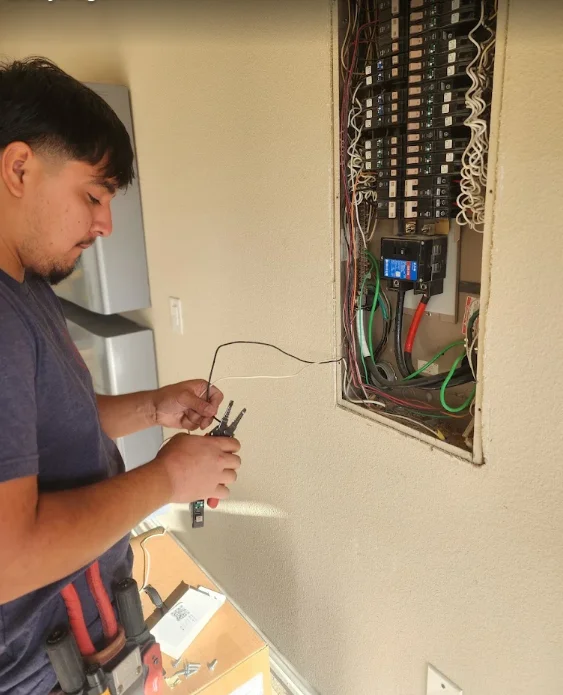
Utility company delays, permits, and the approval maze
One of the most frustrating surprises in an otherwise straightforward panel job is finding out it involves a multi-week back-and-forth with your utility company — plus permits, inspections, and a day or more without power.
In North Texas, most panel upgrade work goes through Oncor (or TXU in some areas) for service reconnection. Your electrician pulls the permit with your city, schedules an inspection, and coordinates the utility disconnect and reconnect. A well-organized contractor manages this for you. A disorganized one leaves you waiting.
"PWP is charging us $1k for 'OH - Reconnect.' Is this ridiculous?" "This replacement requires a permit and PG&E approval... cost up to $9k."— r/pasadena, r/bayarea
What to ask your electrician upfront
Utility, permit, and inspection questions to ask before you sign
Is the permit fee included in your quote, or is it extra?
Do you handle Oncor/utility coordination, or do I need to call them?
How long will power be off, and can you minimize that window?
What happens if inspection finds additional code items?
Is the utility reconnect fee included in the quote?.
““The key is getting the meter release inspection on the front end. So that basically allows us to get the power turned back on for the client as soon as possible. Of course, now when we’re doing this, working with both Oncor and the city, we have to bring everything up to current code and take care of that permit and inspection for you.”.” — Nathan Tiner, ABR Electric
-
Hidden scope: why did the quote suddenly jump to $13,000?
The most common source of sticker shock isn't the panel itself — it's the surprises discovered once work begins. Panel relocation, grounding wire upgrades, and aluminum wiring correction are the three biggest culprits.
"Electrical main panel upgrade and relocation cost $7,740. Is this normal?" "$13k aluminum wiring correction and service panel replacement."— r/homeowners, r/electrical
The three most common hidden scope items
Why your quote can grow — and when it's legitimate
Panel relocation: The 2026 NEC (and current code in most Texas cities) doesn't allow panels inside closets, bathrooms, or certain utility spaces. If your panel is in a non-compliant location, moving it isn't optional — it's a code requirement. Relocation typically adds $1,500 to $3,000.
Grounding upgrades: Older homes often have inadequate grounding. When a new panel is installed, code requires all grounding to be brought up to current standards — including cold water bond and intersystem bonding. This is safety-critical, not a upsell.
Aluminum wiring correction: Homes built in the 1960s–70s sometimes have aluminum branch circuit wiring that requires remediation before a new panel can be safely connected. This is a significant job — up to $8,000+ depending on scope.
"When we're doing a panel upgrade, we have to bring everything up to current code — the primary grounding method, cold water bond, intersystem bonding termination. All those things are part of the current requirements to make sure the entire home is properly grounded and protected."
— Nathan Tiner, ABR Electric
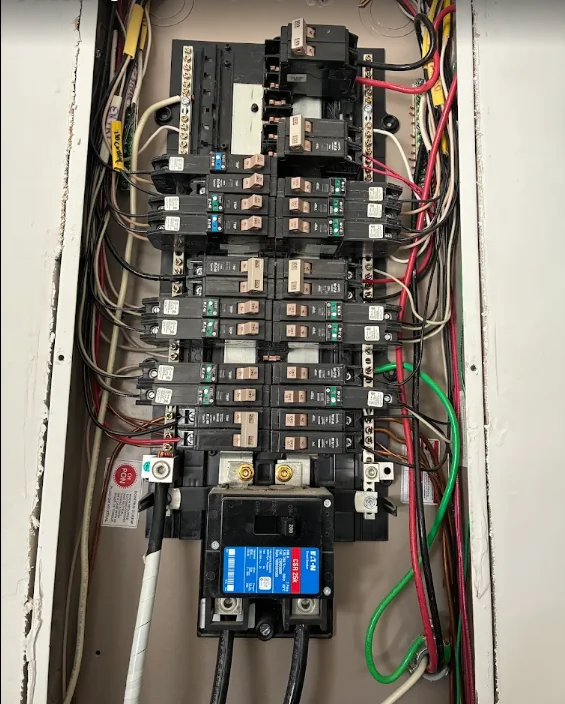
Understanding the 2026 Electrical Panel Upgrade Process for Home Safety
A 2026-compliant electrical panel upgrade is straightforward—but must be performed by a licensed electrician to guarantee code compliance, insurance eligibility, and lasting home safety. The process typically starts with a detailed assessment and load calculation, ensuring your new panel is sized correctly for your home’s needs (especially with EV chargers and high-demand appliances). Next comes the formal permitting phase, coordinated with your city and utility company, followed by the physical swap or relocation of your panel—which usually takes one to two days. Every job concludes with an official inspection and power restoration. Local specialists, like ABR Electric in the Allen/McKinney area, can walk you through each step neutrally and professionally.
“On average a typical panel upgrade is going to cost about $6,000 to $8,000, including the 200-amp panel, feeder upgrade, whole-home surge protector, permit, and inspection. If people are quoting you $10,000 to $15,000, you should definitely get a second opinion.” — Nathan Tiner, ABR Electric
Initial assessment by a licensed electrician
Load calculation and system design for new electrical panel
Permit application and utility shut-off coordination
Panel removal and replacement (1–2 days typical)
Inspection and power restoration
Cost, Value, and Warranty When Upgrading for 2026 Electrical Panel Changes Home Safety
Upgrading an electrical panel is a significant investment in your home, but it’s one that delivers long-term safety, insurance savings, and future-ready capability. Costs vary by panel size, required circuits, relocation needs, and parts quality, with a typical range for North Texas being $1,500 to $4,000 for a standard, straight-swap 200-amp upgrade with new surge protection. Always request details about parts and labor warranties; premium products like Eaton CH and Square D QO often come with transferable lifetime coverage, building extra peace of mind into your investment.
Remember, bids wildly above market rate may not reflect real value, and as one professional puts it: “Always get second, third, fourth opinions. ”In an era where homeowners are self-educating on Reddit before they even pick up the phone, the "black box" method of electrical bidding is dead. As the data from DFW forums suggests, the frustration isn't necessarily the price tag—it’s the variance. When a homeowner sees a $9,000 gap between quotes, they don’t see "expertise"; they see a lack of industry standards.





Write A Comment